What Are the Best Rigging Shackle Sizes in 2026?

Time:2026-10-13 Author:Charlotte
0%

Choosing the right Rigging Shackle Sizes in 2026 requires more than matching a pin diameter to a lifting load. The decision must consider working load limit, sling angle, side loading, connection geometry, material grade, and inspection history. A 3.25-ton shackle may appear adequate on paper, yet a severe sling angle can increase tension dramatically. Small details matter.

Industry data supports this careful approach. Grand View Research’s lifting equipment market analysis reports continued demand for safer, traceable lifting components across construction, marine, energy, and logistics. Allied Market Research also identifies inspection, load control, and equipment reliability as major priorities in the global lifting equipment sector. These reports discuss broader equipment markets, not shackle dimensions specifically. That limitation deserves attention.

Howard I. Shapiro, author of Rigging Handbook, emphasizes a practical principle: “The rated capacity of a rigging device must never be exceeded.” That advice remains relevant when comparing screw-pin, bolt-type, and safety shackles. ASME B30.26 and OSHA 29 CFR 1910.184 also reinforce the need for marked capacities, compatible components, and documented inspections.

The safest size is not always the largest one. Oversized shackles can create poor fit, uneven loading, and unnecessary weight. Undersized shackles can deform before operators notice. A competent rigger should examine the load path, measure connection points, and verify manufacturer tables before selection. Even experienced teams can miss a side load. This guide examines practical Rigging Shackle Sizes for 2026, while recognizing that field conditions may challenge a neat calculation.
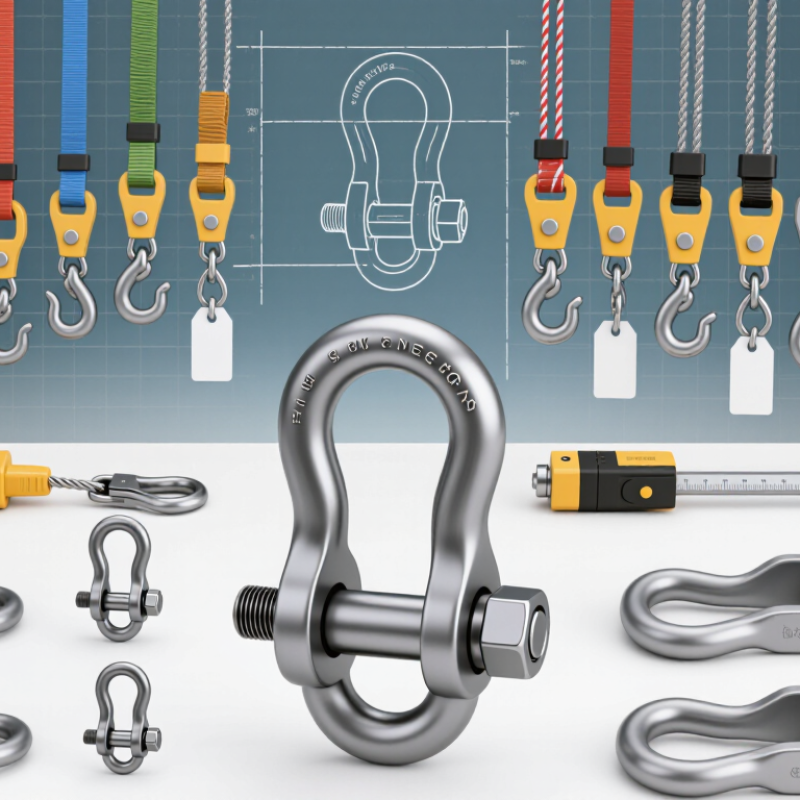
What Are the Best Rigging Shackle Sizes in 2026?

Define WLL with ASME B30.26 and manufacturer-rated capacity tables

What Are the Best Rigging Shackle Sizes in 2026?

The best shackle size depends on the load, connection geometry, and required Working Load Limit. WLL is the maximum load a shackle may support under stated conditions. It is not the breaking strength. ASME B30.26 provides guidance for rigging hardware selection, marking, inspection, and safe use. The standard does not make every shackle interchangeable.

Start with the manufacturer-rated capacity table. Match the shackle type, pin style, size, and loading arrangement. A 3/4-inch shackle may have different ratings for vertical loading, side loading, or basket connections. Read the table carefully. Do not estimate from appearance. The pin must seat correctly, and the load should remain centered in the bow. Angular loading can reduce capacity sharply. Some tables require derating at specific angles.

A practical inspection includes checking WLL markings, pin condition, body distortion, cracks, and heavy corrosion. Remove uncertain hardware from service. That feels cautious, but guessing is worse. One frequent mistake is selecting a larger shackle without checking sling width or connection clearance. Bigger is not automatically safer. I would also recheck the table after changing the sling angle, because a familiar setup can become misleading. Document the selected size, WLL, angle, and inspection result before lifting. Manufacturer instructions and the current edition of ASME B30.26 should control the final decision.

Use Crosby G-209 data: 3/16–2-1/2 in sizes cover 0.33–55 U.S. tons WLL

What Are the Best Rigging Shackle Sizes in 2026?

The G-209 shackle data covers sizes from 3/16 to 2-1/2 inches. Working load limits range from 0.33 to 55 U.S. tons. That span fits light maintenance work, lifting plans, and heavy industrial assemblies. Choose by working load limit, not by pin diameter alone. A larger-looking shackle may still be unsuitable for angled loading.

ASME B30.26 requires rigging hardware to support identification, inspection, and proper use. The U.S. Bureau of Labor Statistics recorded 5,070 fatal work injuries in 2023. That figure covers all industries, not shackles specifically. Still, it shows why load control deserves careful attention. Check the marked WLL, pin condition, body distortion, and contact points before every lift. Keep the load centered. Avoid side loading unless the manufacturer provides a reduced rating.

Field conditions are rarely perfect. Mud hides cracks. Paint can conceal deformation. A pin may appear secure while its threads are damaged. The practical choice is often one size above the calculated requirement, but oversizing can create clearance and handling problems. Angle factors also reduce capacity. For a two-leg sling, a 60-degree angle produces higher leg tension than a vertical lift. Recheck the calculation. Small mistakes become expensive.

What Are the Best Rigging Shackle Sizes in 2026?

Nominal working load limits by shackle size, covering 3/16–2-1/2 inches and 0.33–55 U.S. tons.

Working load limit increases with nominal shackle size, but the relationship is not linear. Select a shackle only after checking the complete lift plan, load angle, hitch configuration, temperature, inspection condition, and applicable safety requirements. Values shown are nominal U.S. tons and are intended for reference, not as a substitute for the manufacturer’s current certification or rated lifting guidance.

Adjust for sling angle and hitch type; never infer capacity from diameter alone

What Are the Best Rigging Shackle Sizes in 2026?

Shackle diameter alone cannot determine lifting capacity. A 19-millimeter shackle may have a different working load limit from another 19-millimeter model. Grade, geometry, pin design, and manufacturing controls all matter. ASME B30.26 requires rigging hardware to show its rated load and identification markings. Check those markings first. Do not guess.

Sling angle changes the force dramatically. For a two-leg sling, each leg carries about 0.58 times the load at a 60-degree angle from horizontal. At 30 degrees, each leg carries the full load. At 20 degrees, the force rises to roughly 1.46 times the load. Angle changes everything.

A basket hitch, vertical hitch, and choker hitch also require different capacity tables. Choker efficiency can decrease when the choke angle becomes sharp. Shackle side loading may require further reductions, often shown at 45 or 90 degrees in the supplier’s certified table.

Field inspections should match the shackle, sling, hitch, and load path. HSE’s 2023/24 workplace report recorded 138 worker fatalities in Great Britain, although it did not isolate shackle incidents. That figure still shows why small calculation errors deserve attention. I sometimes find diameter-based selection tempting because it is quick. It is also incomplete. Use the lowest rated component, confirm the sling angle, and reject damaged or unreadable hardware. Needlessly choosing a larger shackle is not a substitute for proper engineering.

Choose bow or dee shackles by load direction, pin fit, and side-load limits

What Are the Best Rigging Shackle Sizes in 2026?

Choose the shackle by load direction, not appearance. Dee shackles suit straight-line pulls because their narrow shape keeps the load centered. Bow shackles offer a wider crown for sling legs, uneven connections, and limited multidirectional movement. Still, a bow shackle is not permission for uncontrolled side loading. A polished finish proves nothing.

In field inspections, pin fit often reveals the real problem. The pin should pass fully through both holes, with complete thread engagement where applicable. Never force a mismatched pin, bolt, or hook into place. ASME B30.26 requires identification and rated-load information for rigging hardware, but it does not replace the specific load chart. Check the working load limit, pin type, and sling angle together.

Published shackle tables commonly reduce capacity to about 86% at 45-degree side loading and 71% at 90 degrees. These figures vary by design. Verify the exact table before lifting. The U.S. Bureau of Labor Statistics reported 5,283 fatal workplace injuries in 2023, showing why small rigging decisions deserve serious attention. That figure covers all industries, not shackles alone. This distinction matters.

A practical check is simple. Place the pin against the load path, then inspect for bending, damaged threads, or contact with sharp edges. A neat-looking setup can still be wrong. I have seen crews choose larger shackles while ignoring sling-angle forces. Bigger is not automatically safer. Recalculate the force, confirm the fit, and reject any shackle with unreadable markings.

Verify markings, inspection intervals, and discard rules under ASME B30.26

The best rigging shackle size is not chosen by diameter alone. Select a shackle whose rated capacity exceeds the calculated load, including sling angles, shock loading, and side loading. ASME B30.26 requires clear identification, such as size, rated capacity, and manufacturer or traceability markings. Check these markings before every lift. A polished shackle can still be unsafe if its capacity stamp is unreadable.

Inspection timing depends on use, environment, and service severity. Perform a visual inspection before each use and during operation when conditions change. A periodic inspection should occur at intervals determined by a qualified person, generally not exceeding one year unless a stricter schedule is needed. Look for cracks, bending, stretched openings, heavy corrosion, deep gouges, damaged threads, and a pin that does not fit correctly. I have seen teams inspect the bow carefully but overlook worn pin threads. That mistake is easy to repeat.

Tips: Keep shackles clean enough to read their markings. Compare the pin and bow as a matched set. Remove questionable hardware from service immediately, tag it clearly, and send it for qualified evaluation. Discard it when markings are illegible, deformation affects alignment, cracks appear, or wear exceeds the applicable limits. Do not repaint damage or rely on personal judgment alone. A checklist helps, but it is not perfect; harsh saltwater, heat, and repeated loading may demand shorter inspection intervals.

FAQS

What does WLL mean for a rigging shackle?

WLL means Working Load Limit. It is the maximum permitted load under stated conditions. It is not the breaking strength. Use the rated capacity table, not visual judgment.

How should I choose the correct shackle size?

Calculate the load, sling angle, connection geometry, and possible side loading. Select a shackle with a rated capacity above the calculated load. A larger shackle is not automatically safer.

Why does loading direction affect shackle capacity?

Vertical, side, and basket loading can have different ratings. Angular loading may reduce capacity sharply. Some tables require specific derating. Keep the load centered whenever possible.

What markings should appear on a shackle?

Check for size, rated capacity, and traceability markings. The markings should remain readable. An attractive, polished shackle can still be unsafe.

What should I inspect before lifting?

Look for cracks, bending, stretched openings, deep gouges, and heavy corrosion. Check the pin threads and seating. Inspect the bow too. Small details matter.

How often should shackles receive inspections?

Perform a visual inspection before every use. Recheck during operation when conditions change. A qualified person should set periodic intervals, usually no longer than one year. Harsh saltwater may require shorter intervals.

When should a shackle be removed from service?

Remove it immediately when markings are unreadable, cracks appear, or alignment is affected. Also remove hardware with serious wear, distortion, or damaged threads. Tag it clearly. Do not repaint damage.

What common mistake occurs during shackle selection?

People often choose a larger shackle without checking sling width or clearance. The pin may not seat correctly. I might trust a familiar setup too quickly. Recheck the table after changing the sling angle.

Conclusion

Choosing the right Rigging Shackle Sizes in 2026 requires more than matching a shackle’s diameter to a load. Working Load Limit (WLL) should be confirmed using ASME B30.26 guidance and the manufacturer’s rated capacity tables. Available sizes may span from approximately 3/16 to 2-1/2 inches, with WLL ratings ranging from about 0.33 to 55 U.S. tons, but these figures vary by design and must be verified from product markings and documentation.

Capacity must also be adjusted for sling angle, hitch type, and any side loading. Bow shackles are generally suited to multi-directional connections, while dee shackles are better for more aligned loads; in both cases, pin fit and side-load limits are critical. Before use, inspect identification marks, deformation, cracks, corrosion, and thread condition according to established inspection intervals. Remove shackles from service when they exceed permitted wear, show damage, or have unreadable markings.


Charlotte

Charlotte

Charlotte is a seasoned marketing professional with a deep understanding of the company's portfolio and a passion for elevating its presence in the market. With a keen eye for detail and a commitment to excellence, she ensures that our professional blog is regularly updated with insightful articles......