Selecting the best Turnbuckles Rigging supplier in China starts with the job the hardware must perform. A marine installation, construction project, and industrial cable system can require different end fittings, materials, and adjustment ranges. The details matter. Buyers should compare product drawings, thread dimensions, body length, and stated working load limits before requesting a quotation. A polished catalog alone is not enough.
A dependable supplier should explain how its turnbuckles are made and inspected. Ask about material grades, surface finishes, production checks, and available test or traceability documents. Confirm whether ratings apply to the complete assembly or individual components. That distinction can be easy to miss. Samples also help reveal thread smoothness, fitting alignment, and finish quality, though they do not replace appropriate engineering review. Requirements vary.
This guide outlines practical ways to assess Chinese manufacturers, compare specifications, and communicate project needs clearly. It also considers lead times, packaging, customization, and after-sales support. Request written confirmation for critical dimensions and load data, then review those details against your application and qualified engineering guidance. No supplier is right for every project. A lower price may look attractive, but unclear documentation or inconsistent communication can cost time later. The aim is not to find the loudest claim; it is to identify a supplier whose evidence, product range, and service fit the actual rigging requirements.
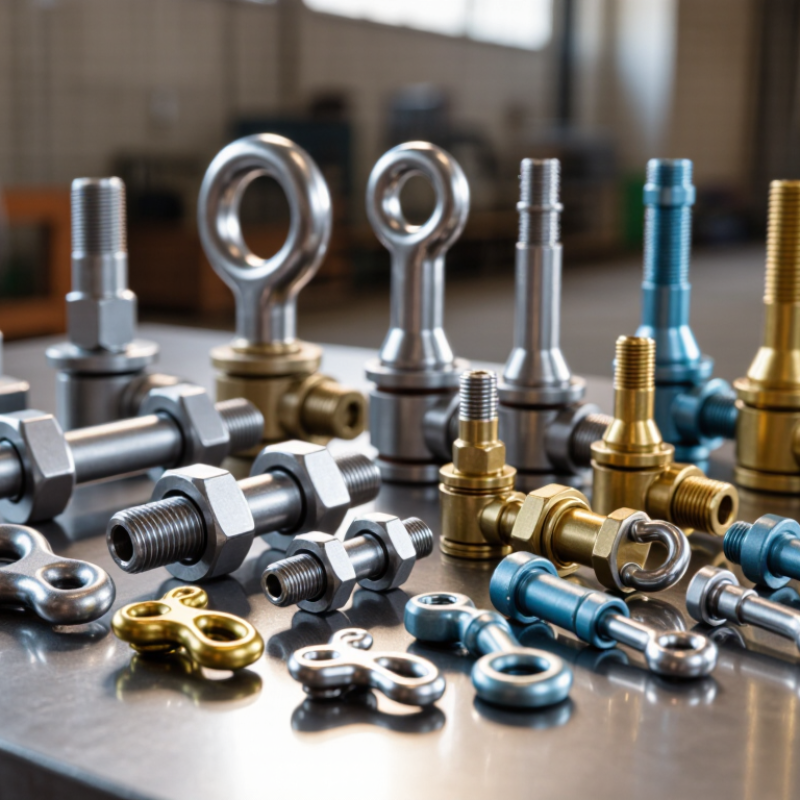
A turnbuckle has three working parts: a central body and two end fittings. The body usually contains opposite-hand threads. Rotating it draws the ends together or moves them apart, adjusting tension without shifting the attached anchors. Open bodies are easier to inspect and clean. Closed bodies offer a more enclosed profile, but dirt can be less visible inside.
End fittings determine how the turnbuckle connects. Jaw ends use a pin or bolt, eye ends connect to compatible shackles, and hook ends allow quick placement where the application permits. Match thread size, fitting style, material, and rated working load to the rigging system. A neat-looking installation can still be wrong if its fittings do not align or its load rating is too low. Small mismatch, big problem.
Tips: Keep threads engaged as specified by the maker, and secure locknuts where provided. Inspect for bent fittings, corrosion, damaged threads, or uneven tension before use. Adjust only under suitable conditions; do not force a loaded body. Field checks help, but they cannot replace proper product documentation or competent inspection.
For buyers comparing turnbuckles from China, end fittings matter as much as body material. Jaw ends use a pin that can be removed for installation around a fixed lug. Eye ends form a closed connection and suit shackles or other compatible links. Hook ends allow quicker attachment, but an open hook can disengage if the connection becomes slack. Fit matters. Check pin diameter, opening width, thread size, and rated capacity against the actual rigging point.
Carbon steel is often selected for strength and cost, with a protective finish helping limit corrosion. Stainless steel suits damp or corrosive settings, but it is not maintenance-free. Grade matters: the supplier should identify the alloy and provide traceable material documentation. The worldstainless 2023 production report recorded 58.4 million metric tonnes of global stainless steel production. That scale indicates broad material availability, not the quality of any individual turnbuckle.
Ask for clear capacity markings, inspection guidance, and test documentation aligned with applicable rigging-hardware requirements, such as ASME B30.26. Check threads for smooth engagement and inspect pins, welds, and hooks for deformation or damage before use. A polished finish can look reassuring, but appearance alone proves little. I would also confirm how the supplier controls batch consistency; a product sheet rarely answers that fully.
Working load limit (WLL) must match the complete rigging setup, not just the turnbuckle. For a balanced, two-leg sling, with angles measured from horizontal, each leg’s tension is W ÷ (2 × sin θ). At 30°, each leg carries the full load, W. At 60°, each carries about 0.577W. Angles matter. These figures assume equal loading, a centered load, and no dynamic forces. Real lifts can differ.
ASME B30.9-2021 covers sling selection, use, and inspection; OSHA 1910.184 requires sling identification and rated-capacity limits. Use the applicable capacity information for the actual hitch and angle, and check every component in the load path. A turnbuckle’s rating does not increase a sling’s capacity. Confirm the load weight, center of gravity, connection geometry, and manufacturer’s rated capacity before lifting. A dependable rigging supplier in China should help verify these details and provide traceable product documentation. I would not rely on a quick angle estimate alone; small geometry changes can raise leg tension substantially.
A turnbuckle may look simple, but it carries load through threads, pins, and end fittings. ASME B30.26 covers rigging hardware, including turnbuckles, and sets expectations for selection, use, and inspection. OSHA 1926.251(a)(1) requires rigging equipment to be inspected before each shift and as necessary during use; defective equipment must be removed from service. For construction projects, that makes a clear inspection routine essential, not optional.
Check the body for bending or cracks, and examine threads for galling, corrosion, or deformation. Confirm pins and jaws are secure, and verify that the working load limit is legible and appropriate. Record the inspection and identify the unit, especially when several turnbuckles share a busy site.
The U.S. Bureau of Labor Statistics reported 5,283 fatal work injuries across all industries in 2023; this figure is not specific to rigging, but it underlines why load-control practices deserve attention.
A supplier in China should provide traceable product information and supporting inspection or test documents, while the buyer verifies them against the job’s requirements. Paperwork alone is not proof.
In practice, rushed checks still happen, and that deserves honest review. A scratched label can be missed. Keep questionable hardware out of service until a competent person evaluates it.
Best Turnbuckles Rigging Supplier in China
Evaluating China Suppliers: Traceability, Test Reports, and Export Standards
A supplier’s traceability system should connect each turnbuckle to its material batch, production record, inspection, and shipment documents. Ask for a sample record, not just a certificate. Check that part numbers, batch identifiers, dimensions, and rated capacities match across the product marking and paperwork. Small mismatches matter.
The ISO Survey 2022 recorded 1,265,216 valid ISO 9001 certificates across 194 economies. That scale shows how common certification is; it does not prove a particular turnbuckle is safe or well made. Request test reports that identify the tested model and batch, the test method, results, and equipment calibration details. For lifting applications, compare inspection and marking information with the applicable requirements, such as ASME B30.26. A polished report can still leave gaps.
Export readiness means confirming requirements for the destination and intended use before ordering. Ask whether documents include an accurate commercial description, country of origin, packing details, and any required conformity records. Then compare those details with the goods received. Paperwork matters. A practical supplier should explain what it can verify and what it cannot. Buyers sometimes overlook this distinction; I would not treat a general quality certificate as a substitute for product-level evidence.
| Evaluation Area | What to Check | Evidence to Request | Evaluation Basis | Assessment |
|---|---|---|---|---|
| Product identification and traceability | Confirm that each turnbuckle type, size, material, end fitting, and rated capacity can be linked to its production batch. | Product specification, sample marking photographs, batch or lot coding scheme, and a sample record showing how a batch is traced through production. | Markings and records should match the purchase specification and the supplied product. Confirm that batch codes are legible and can be traced to relevant production and inspection records. | Supplier-specific evidence required |
| Material and component records | Check the declared material and grade for the body, end fittings, pins, or other specified components. | Material test certificates or other material records, purchase or receiving records, and a documented link between the material batch and finished-product lot. | Verify that the documents identify the material, test results where applicable, and relevant batch or heat numbers. Do not assume a certificate covers a finished turnbuckle unless the traceability link is demonstrated. | Supplier-specific evidence required |
| Rated capacity and markings | Check the stated working load limit or rated capacity, product configuration, size, and any stated operating limitations. | Technical data sheet, drawing, product marking details, and the purchase specification or approved product schedule. | Confirm that the rating applies to the exact model and configuration supplied. Working load limit, proof load, and breaking load are different terms and should not be treated as interchangeable. | Confirm against the ordered specification |
| Load and performance testing | Determine which tests were performed, on what samples, and whether the results apply to the ordered product and production lot. | Test report stating the product or sample identification, test method, applied load, result, date, and testing organization. Request lot-specific records if required by the contract. | Check that the reported test and acceptance criteria match the applicable product specification or agreed purchase requirements. A test report for a different model or unidentified sample is not evidence for the ordered lot. | Review report scope and sample identity |
| Inspection and quality controls | Review inspection stages for dimensions, thread engagement, finish, assembly, and final product identification. | Inspection and test plan, inspection records, nonconformity process, and a sample final inspection report. | ISO 9001 certification can indicate a quality management system, but it does not by itself certify a particular turnbuckle or prove product conformity. Verify the certificate’s validity and scope with its issuer or accreditation source. | Check records and certificate scope |
| Applicable rigging requirements | Identify the standards, regulations, and customer specifications applicable to the product and intended use. | Written list of claimed standards, relevant product documents, and conformity evidence for the destination market and end use. | ASME B30.26 addresses rigging hardware, including inspection and use considerations; confirm the current edition, product scope, and contract requirements. A standards reference alone does not establish compliance. | Confirm applicability for the intended use |
| Independent laboratory reports | Check whether testing was performed by an independent laboratory and whether the laboratory is competent for the reported test. | Complete report with laboratory details, report number, test method, sample identification, results, and relevant accreditation scope where claimed. | ISO/IEC 17025 concerns the competence of testing and calibration laboratories. Verify the laboratory’s accreditation and scope for the specific test; accreditation should not be assumed from a logo alone. | Verify report and accreditation scope |
| Export and shipment documents | Confirm that shipment documents match the goods, quantities, declared origin, consignee, and destination requirements. | Commercial invoice, packing list, transport document, and certificate of origin when required or requested. Check any destination-specific import or conformity documents separately. | Document requirements depend on the destination country, transaction, and buyer’s instructions. Confirm customs classification with the responsible customs broker or authority rather than relying on a generic product description. | Confirm with buyer and destination requirements |
| Packaging and shipment condition | Check protection against corrosion, impact, moisture, and loss of small components during storage and transport. | Packaging specification, packing photographs, and shipment inspection records where required by the contract. | Agree packaging and preservation requirements before shipment, especially for long-distance transport or extended storage. Verify the delivered condition on receipt. | Specify and inspect per order |
This is a supplier-evaluation checklist, not a report of findings about any specific supplier. Request and verify original, product-relevant documents before making a purchase or relying on a turnbuckle for lifting or rigging.
It has a central body and two end fittings. Opposite-hand threads let the body adjust tension as it turns.
Open bodies are easier to inspect and clean. Closed bodies have a more enclosed profile, but hidden dirt may be harder to spot.
Jaw ends use a pin or bolt, eye ends connect to compatible shackles, and hooks allow quick placement where suitable. Check alignment, thread size, material, and rated capacity. Small mismatch, big problem.
For an evenly loaded, two-leg sling measured from horizontal, each leg carries W at 30°. At 60°, each carries about 0.577W. Angles matter.
Check the complete rigging setup, including every component in the load path. Confirm load weight, center of gravity, connection geometry, and rated capacities. A turnbuckle rating cannot raise a sling’s capacity.
Look for bent parts, cracks, corrosion, damaged threads, loose pins, and uneven tension. Check that the load rating is readable and suitable. A scratched label can be missed.
Remove questionable hardware until a competent person evaluates it. Do not force a loaded body, and do not rely on paperwork alone. Rushed checks still happen.
Turnbuckles Rigging are adjustable tensioning devices used to tighten or fine-tune assemblies by rotating a central body connected to end fittings. Common configurations include jaw, eye, and hook ends, available in steel or stainless steel to suit different environments and connection requirements. Selecting the right unit involves matching its working load limit (WLL) to the application and considering how sling angles affect tension: at narrower angles, the load on each sling leg can increase substantially, so capacity should be checked for the actual setup.
Safe use also depends on proper installation, routine inspection, and adherence to applicable guidance such as ASME B30.26 and OSHA 1926.251. When evaluating a supplier in China, buyers should look for clear product traceability, relevant test reports, consistent material information, and export documentation suited to the destination market. These checks help support informed purchasing and reliable rigging practices.
Rui De Tai