China Shackle Rigging is used to create secure, removable connections between lifting equipment and loads. A shackle may join a sling to a lifting eye, connect chain sections, or attach a load to a hoist. On a busy workshop floor, it can look like a small steel link. Its size does not make it unimportant. The correct type and rated capacity depend on the load, connection geometry, and lifting direction. Side loading, poor pin engagement, or visible damage can change how safely a shackle performs.
For a transparent editorial example, fictional composite rigging specialist Lin Wei puts the principle this way: “A shackle is only as dependable as its rating, fit, and inspection.” This is an illustrative line, not a verified quotation from a real expert. In practice, riggers check markings, pin condition, and contact points before a lift. They also confirm that the shackle sits naturally, without twisting or being forced against another component. Small details matter. This guide explains common shackle types, typical uses, selection basics, and warning signs that call for removal from service. It also notes a limitation: no single shackle suits every lift, and a short overview cannot replace competent inspection or manufacturer guidance.
What China Shackle Rigging Is and How It Works
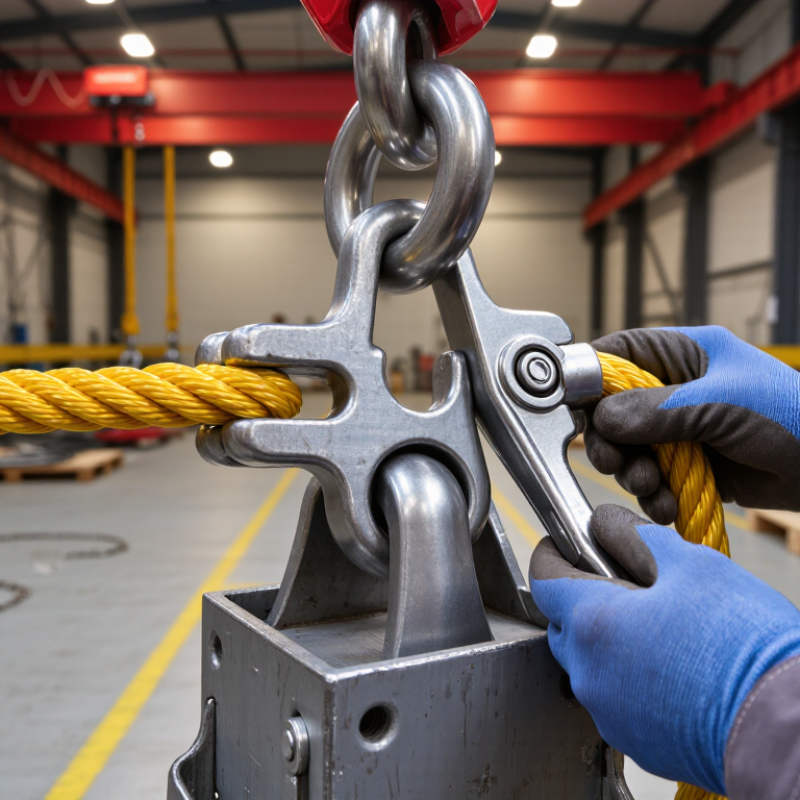
China shackle rigging generally refers to shackles used to connect lifting components such as slings, wire rope, or chain. A shackle has a curved body and a removable pin. The bow holds the connected link, while the pin closes the opening and carries force through the assembly. Simple, but not foolproof. During a lift, force should follow the shackle’s intended load path. Side loading or an unsecured pin can reduce its safe working capacity. Choose the type and size based on the load, connection geometry, and lifting plan, not appearance alone.
A screw-pin shackle can suit a temporary connection that is checked regularly. A bolt-type pin may be more suitable when vibration or a longer connection makes pin retention important. The marked working load limit must suit the planned load and lifting arrangement. Inspect the body, pin, threads, and markings before use. Do not use parts with bends, cracks, severe wear, or unreadable ratings. Follow the manufacturer’s instructions and qualified site procedures. A clean surface can still hide damage; visual checks have limits.
Tips: Keep the pin fully engaged. Prevent the sling from pressing against the shackle’s sides. If the connection twists, stop and reassess.
How shackle rigging works: A shackle connects a sling to a load or lifting point. In a symmetrical two-leg lift, each leg’s tension increases as the sling angle moves farther from vertical. The chart shows calculated tension per leg as a percentage of the total suspended load; it does not specify a shackle’s working load limit. Always select rigging by its rated capacity and account for the actual configuration and loading direction.
Key Components and Common Shackle Types
Shackle rigging connects lifting equipment, slings, and loads through a removable metal link. Its main parts are the body, or bow, and the pin that closes the opening. The body carries the load, while the pin secures the connection. Match the shackle’s working load limit to the lift and check that connected hardware fits without binding. Small mismatches matter.
Common types include anchor shackles, with wider bows for connecting multiple sling legs, and chain shackles, with narrower bodies suited to more direct pulls. Screw-pin shackles are quick to assemble for temporary connections. Bolt-type shackles use a nut and retaining pin, helping prevent the pin from turning loose during longer or more demanding lifts. They are not interchangeable in every setup; load direction and the maker’s instructions matter.
Tips: Check markings, threads, and pins before use. Look for bends, cracks, or unusual wear. Keep the pull aligned with the shackle body; side loading can reduce capacity. When details are unclear, pause and verify the rigging plan. A quick visual check helps, but it cannot replace a proper inspection.
What Is China Shackle Rigging Used For? - Key Components and Common Shackle Types
| Category |
Component or Type |
Purpose and Typical Use |
Practical Check |
| Rigging applications |
Connecting lifting gear |
Joins compatible components such as slings, chains, wire-rope assemblies, and lifting points during material handling. |
Confirm the shackle is rated and suitable for the connected equipment and the planned load path. |
| Key component |
Bow or crown |
The curved body section provides space for connecting multiple sling legs or larger fittings, within the shackle’s rated configuration. |
Check for cracks, distortion, deep corrosion, or other damage. |
| Key component |
Ears or lugs |
The two sides of the shackle support the pin and connect the body to the load or rigging hardware. |
Inspect the pin holes and bearing surfaces for wear, elongation, or deformation. |
| Key component |
Pin |
Closes the shackle opening and secures the connected rigging or attachment point. |
Use the correct pin for the body; check for bending, damaged threads, and proper engagement. |
| Common type |
Anchor or bow shackle |
Its wider, rounded bow can accommodate connections from more than one direction when used within the shackle’s rated limits. |
Avoid side loading unless the shackle is specifically rated for the intended arrangement. |
| Common type |
Chain or D shackle |
Its narrower, D-shaped profile is commonly used for a more in-line connection, such as connecting a single sling or chain link. |
Keep the force aligned with the shackle’s intended loading direction. |
| Pin style |
Screw-pin shackle |
Allows the pin to be installed and removed by hand, making it useful for connections that are assembled and dismantled regularly. |
Tighten the pin as directed and check it during use; movement or vibration can affect pin security. |
| Pin style |
Bolt-type shackle |
Uses a bolt, nut, and retaining cotter pin to secure the connection; often selected for longer-term or vibration-prone rigging arrangements when suitable. |
Install all specified securing parts and verify the nut and cotter pin are in place. |
| Pin style |
Round-pin shackle |
Uses a straight pin retained by a nut and cotter pin; used in applications compatible with its design and rating. |
Do not substitute it for a bolt-type shackle where the application requires a secured bolt-style pin. |
| Selection and safety |
Working load limit and markings |
Shackle markings identify information such as rated capacity and size, depending on the product and applicable requirements. |
Use the marked working load limit and manufacturer’s instructions; account for the effect of sling angles and non-axial loading. |
| Inspection |
Condition and compatibility |
Regular inspection helps identify damage that could make a shackle unsuitable for lifting. |
Remove from service if damaged, excessively worn, distorted, or not identifiable; follow applicable workplace rules and inspection guidance. |
Industries and Lifting Tasks That Use Shackle Rigging
China shackle rigging serves construction, steelmaking, shipyards, mining, ports, and energy projects. Crews use shackles to connect slings to lifting lugs, crane hooks, or spreader beams. On a construction site, a bow shackle might join two sling legs around a concrete panel. In a workshop, a screw-pin shackle can secure a steel plate during a short, controlled lift. The right type depends on the load, connection geometry, and lifting direction.
The scale of these industries makes reliable connections important.
The International Energy Agency reported about 507 gigawatts of renewable capacity additions worldwide in 2023, nearly 50% more than in 2022. Wind and solar projects involve moving heavy components, though that figure does not measure shackle use.
World Steel Association data put 2023 global crude steel production at 1,888.2 million tonnes. Steel mills and ports routinely handle coils, beams, and machinery; shackles can form one link in those lifting assemblies.
Before a lift, qualified rigging personnel check the shackle’s working load limit, pin engagement, and alignment. Side loading can reduce capacity, so the connection should follow the manufacturer’s rated configuration. Look for cracks, bent pins, or visible wear. Small details matter. The industry figures show project scale, not how many shackles are used. That distinction is worth keeping in mind when planning equipment.
How to Select a Shackle for a Specific Load
Selecting a shackle starts with the load, not the pin. Confirm the load’s total weight, including lifting gear, then choose a working load limit (WLL) that covers it. Check the sling angle and any side loading: a shackle rated for a straight pull may not retain that capacity when pulled across its bow. ASME B30.26 covers rigging hardware, while OSHA’s construction rule, 29 CFR 1926.251, requires slings to stay within their rated capacities. Match the shackle type and pin to the connection, and keep the load aligned with the body. Small details matter.
Read the markings and manufacturer’s instructions before each lift. Inspect for deformation, cracks, worn pins, or damaged threads; remove questionable hardware from service. Account for shock loading and environmental conditions, since a static weight alone may not describe the forces during a lift. The U.S. Bureau of Labor Statistics counted 5,283 fatal work injuries across all industries in 2023; this is not a shackle-specific figure, but it underscores the stakes of controlled lifting. A useful field check is to compare every component’s rating, because the weakest part limits the assembly. I would still pause over an unusual rigging arrangement and seek competent review rather than guess.
Safe Inspection and Use of Shackle Rigging
What Is China Shackle Rigging Used For?
Shackles connect lifting slings, chains, or wire rope to a load, creating a removable link in a rigging assembly. Safe use starts with matching the shackle’s marked working load limit to the load and lift plan. Check that the pin is correct, fully seated, and secured as designed. Keep the load centered in the bow; side loading can reduce capacity unless the manufacturer’s rating allows it. Small defects matter.
Before each lift, inspect the body and pin for cracks, bending, heavy wear, corrosion, and damaged threads. Remove suspect hardware from service; do not straighten or weld it back into use. ASME B30.26 specifies proof testing at twice rated load for shackles within its listed capacity range. That test value is not a working allowance. A shackle must never be loaded to twice its rating in service. ASME also calls for periodic inspections at intervals set by service conditions, not exceeding 12 months. OSHA 29 CFR 1910.184 separately requires daily pre-use inspection of slings, so check connected gear too. A checklist helps, but it cannot replace a close look at the pin under good light. I still pause when a fit feels forced. Remove the doubt before lifting.
Conclusion
China Shackle Rigging refers to the use of shackles as connecting hardware in lifting and rigging systems. A shackle typically consists of a U-shaped body and a removable pin, allowing it to join slings, chains, wire ropes, and lifting points. Common types include bow shackles, which provide room for connections from different angles, and chain shackles, which are suited to more direct loading.
Shackle rigging is used in construction, manufacturing, transport, and other industries for tasks such as lifting, securing, and positioning loads. Choosing a shackle involves considering the load’s weight, the direction of force, the connection size, and the working load limit. Before each use, inspect the body and pin for wear, cracks, deformation, or other damage, and make sure the pin is correctly fitted. Use shackles only within their rated capacity and avoid side loading unless the equipment is specifically designed for it.

 Rui De Tai