Selecting Custom Crosby Rigging for global projects requires more than comparing prices or browsing a familiar product catalog. Buyers must connect each component with the actual lifting environment, load path, working load limit, and inspection plan. A shackle may look suitable on a screen, yet its pin diameter, alloy, finish, or certification can change its performance. Small details matter.
Experienced procurement teams usually begin with application data. They record the lifted load, sling angle, temperature, exposure to saltwater, connection points, and expected service frequency. This information helps suppliers recommend suitable Crosby-compatible or Crosby-manufactured rigging solutions. Custom Crosby Rigging may include selected shackles, hooks, wire rope assemblies, master links, or identification markings. Every item should have clear specifications, traceability, and relevant test documentation. A reputable supplier should explain limitations, not simply promise maximum strength. That distinction builds trust.
Global buyers also need practical control after ordering. Confirm packaging, labeling, inspection records, replacement parts, delivery terms, and communication responsibilities before production begins. Verify supplier credentials through authorized channels where possible. Ask how dimensions are checked and how quality records are retained. We have seen attractive quotations create confusion when drawings were incomplete. That mistake is easy to underestimate. A missing tolerance can delay installation, increase costs, or create an unsafe mismatch. Technical review should involve a qualified lifting professional and follow applicable local requirements. No catalog can replace competent engineering judgment. Careful questions, documented decisions, and honest review make Custom Crosby Rigging a more reliable choice for demanding international operations.
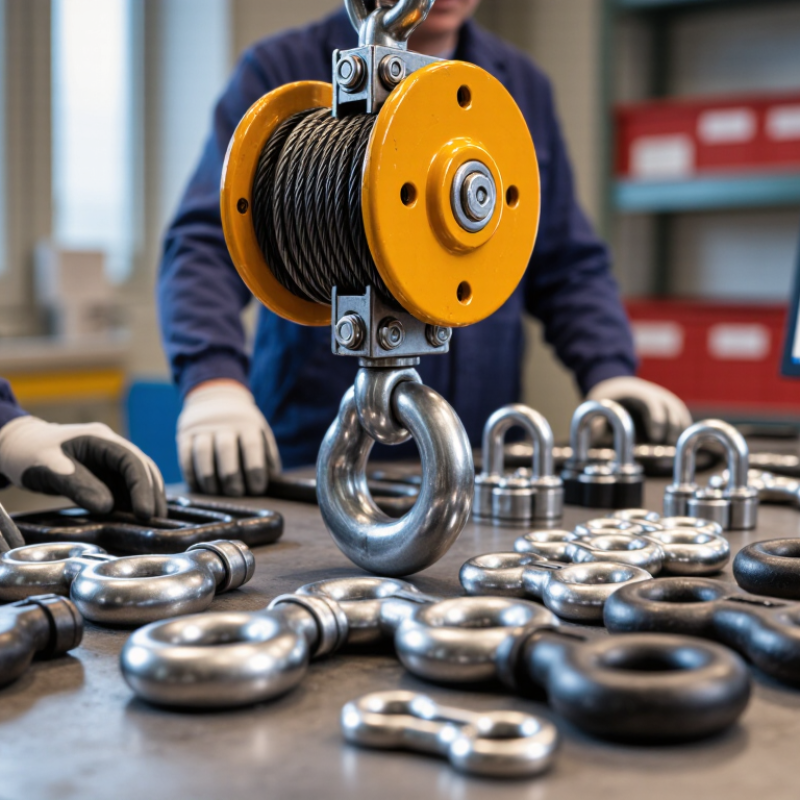
Custom rigging starts with the real load, not the catalog description. Record the lifted weight, center of gravity, lifting points, temperature, edge contact, and sling angle. The rated capacity must match the complete assembly, including rope construction, termination, hardware, and hitch type. A spreadsheet helps, but it can still hide a bad assumption.
The common 5:1 wire-rope benchmark means the minimum breaking force should be five times the working load limit, or WLL. This design factor is stated for wire-rope slings under OSHA 1910.184. ASME B30.9 also requires users to consider configuration, angle, inspection, and operating conditions. It is not permission to lift five times the marked capacity. Never treat breaking strength as usable capacity.
A two-leg sling becomes heavily loaded when the legs flatten. At a 30-degree angle from horizontal, each leg carries roughly the full lifted weight, before dynamic effects. Shock loading, sharp edges, corrosion, and repeated bending can reduce practical strength.
Industry inspection guidance, including ISO 4309 principles, emphasizes deformation, broken wires, and corrosion as removal concerns. Global buyers should request test certificates, traceable markings, material details, and clear WLL tables. I would also recheck the lift plan on site; drawings often miss an uneven load or a hidden edge.
Sling angle changes working load limit (WLL) dramatically. Measure the angle from the horizontal, not the vertical.
For two equally loaded legs, capacity equals 2W sin θ. If each leg carries a 4-ton vertical WLL, the theoretical totals are 6.9 tons at 60°, 5.6 tons at 45°, and 4 tons at 30°. The 30° arrangement loses about 42% capacity compared with 60°.
These values assume balanced loading, sound connections, and no edge damage.
Geometry is only part of the decision. ASME B30.9 requires users to follow rated configurations and inspect slings before use.
OSHA 1910.184 warns against sling angles below 30° unless a qualified person approves them.
A practical field detail matters: a sharp beam corner can cut a synthetic sling, even when the arithmetic looks safe. Use suitable edge protection and confirm the actual center of gravity.
Global buyers should request angle-specific WLL tables, traceable inspection records, and material certificates.
The U.S. Bureau of Labor Statistics reported 1,069 fatal occupational injuries in transportation and material-moving occupations during 2023. That category is broader than rigging, but it shows why planning deserves scrutiny.
Drawings can hide unequal leg loading. Real lifts rarely behave perfectly. Have a competent person verify the weakest component, connection angle, and landing area before approving the custom design.
How to Choose Custom Rigging Hardware for Global Buyers?
Specify each component by grade, pin size, WLL, and proof-test data. Grade confirms material strength and heat-treatment requirements. Pin size must match the sling eye, socket, and connection geometry. A small mismatch can create side loading or uneven contact. WLL should reflect the complete lifting arrangement, not one isolated fitting. Account for sling angle, shock loading, temperature, corrosion, and reeving losses. The ISO 4309 guidance on wire-rope care supports documented inspection and discard decisions. These details make procurement traceable across different countries and suppliers.
Proof-test records should show the test load, date, equipment identification, calibration status, and acceptance result. Request material certificates and serial-number links. The International Labour Organization reported nearly three million work-related deaths annually, including fatal accidents and occupational diseases. That figure is sobering. In Great Britain, HSE recorded 138 worker fatalities during 2023/24. Documentation cannot prevent every error, but missing documentation hides risk. I have seen technically impressive spreadsheets fail because the pin diameter was copied incorrectly. Recheck the drawing against the delivered hardware.
Tips: State units clearly, such as millimetres and tonnes. Define WLL conditions in the purchase order. Require proof-test evidence before shipment. Ask for photographs showing markings and pin threads. Keep one independent inspection record. A second review is worthwhile.
| Hardware Type | Material / Grade | Nominal Size | Pin Diameter | Working Load Limit (WLL) | Proof-Test Requirement | Calculated Proof Load | Typical Application | Selection Check |
|---|---|---|---|---|---|---|---|---|
| Anchor shackle | Forged alloy steel, lifting grade; minimum 6:1 design factor | 3/8 in / 10 mm | 9.5 mm | 1.00 t 9.81 kN |
2 × WLL | 2.00 t 19.61 kN |
Single-leg sling connections and general lifting | Confirm bow clearance, pin engagement, and certified WLL |
| Anchor shackle | Forged alloy steel, lifting grade; minimum 6:1 design factor | 1/2 in / 13 mm | 12.7 mm | 2.00 t 19.61 kN |
2 × WLL | 4.00 t 39.23 kN |
Two-leg slings and moderate lifting assemblies | Check sling angle and side-loading limitations |
| Anchor shackle | Forged alloy steel, lifting grade; minimum 6:1 design factor | 5/8 in / 16 mm | 15.9 mm | 3.25 t 31.87 kN |
2 × WLL | 6.50 t 63.74 kN |
Heavy-duty lifting points and spreader connections | Use only with compatible sling eyes or master links |
| Anchor shackle | Forged alloy steel, lifting grade; minimum 6:1 design factor | 3/4 in / 19 mm | 19.1 mm | 4.75 t 46.58 kN |
2 × WLL | 9.50 t 93.16 kN |
Industrial machinery, structural steel, and plant lifting | Verify hole diameter and pin-to-bow fit before use |
| Anchor shackle | Forged alloy steel, lifting grade; minimum 6:1 design factor | 7/8 in / 22 mm | 22.2 mm | 6.50 t 63.74 kN |
2 × WLL | 13.00 t 127.49 kN |
Large lifting frames and multi-point rigging | Account for unequal load sharing between lifting points |
| Anchor shackle | Forged alloy steel, lifting grade; minimum 6:1 design factor | 1 in / 25 mm | 25.4 mm | 8.50 t 83.36 kN |
2 × WLL | 17.00 t 166.71 kN |
Heavy construction, offshore, and energy-sector lifting | Check dynamic effects, corrosion allowance, and inspection status |
| Anchor shackle | Forged alloy steel, lifting grade; minimum 6:1 design factor | 1-1/8 in / 29 mm | 28.6 mm | 9.50 t 93.16 kN |
2 × WLL | 19.00 t 186.33 kN |
High-capacity lifting and engineered rigging systems | Require documented proof-test results and traceability |
| Anchor shackle | Forged alloy steel, lifting grade; minimum 6:1 design factor | 1-1/4 in / 32 mm | 31.8 mm | 12.00 t 117.68 kN |
2 × WLL | 24.00 t 235.36 kN |
Engineered lifts, heavy modules, and lifting beams | Use an approved lift plan for critical or non-routine lifts |
| Proof-test values are calculated at two times the stated WLL, with 1 metric tonne-force = 9.80665 kN. Actual allowable capacity, grade designation, dimensions, temperature limits, and proof-test acceptance criteria must be verified against the selected hardware certificate and the applicable lifting standard before use. Never exceed the lowest-rated component or apply side loading unless specifically permitted by the manufacturer. | ||||||||
When selecting custom rigging for international lifting work, compliance should guide the design, not follow it. Request drawings, material specifications, working load limits, and inspection records before approval. Each sling should have a durable tag showing capacity, diameter, length, hitch type, and identification number. Missing details create avoidable delays.
ASME B30.9 provides practical guidance for sling selection, inspection, use, and removal from service. In the United States, OSHA 1910.184 addresses employer responsibilities for safe sling use and inspection. It is not a universal product certificate. EN 13414 focuses on steel wire rope slings, including construction, marking, and verification requirements. Confirm the exact part and current edition. Regional adoption can differ.
A competent supplier should provide traceable material certificates, proof-test documentation, and inspection procedures matching the intended lift. Check the working load at the actual sling angle, not only the vertical rating. A sharp edge, crushed ferrule, broken wire, or heat discoloration may require immediate rejection. Small details matter.
One common mistake is trusting a familiar certificate without checking its scope. I have found that documents can look complete while omitting sling configuration or test limits. Buyers should also confirm who performs final inspection and how records remain available after delivery. Requirements may still be unclear, and that uncertainty deserves a written answer before the first lift.
Verify Compliance with ASME B30.9, OSHA 1910.184, and EN 13414
Reference sources: OSHA 1910.184, ASME B30.9, EN 13414
When global buyers choose custom rigging, documentation should be designed with the hardware.
Every sling, shackle, or fitting needs a traceable identity. Record material grade, batch number, working load limit, dimensions, and production date. Link these details to drawings, certificates, and the purchase order.
A clear identification tag matters. It prevents confusion when similar components share one crate. Keep records in English, with controlled translations for local teams. Digital files help, but printed copies still matter at remote sites.
Tips:
Create one document pack per item or assembly. Include a certificate of conformity, material records, load-test results, inspection photographs, and revision history.
State the inspection method, date, inspector, and acceptance criteria. Do not rely on a generic certificate. It may not identify the actual component. Ask for serial numbers before shipment. Check that tags, packing lists, and certificates match.
CE requirements need careful review.
CE marking applies only when relevant European Union rules cover the product. Confirm the applicable regulation, technical file duties, risk assessment, and declaration requirements.
A CE logo alone proves little. It is not a substitute for inspection.
Requirements can differ when rigging is supplied as machinery, an accessory, or part of a larger assembly. This classification is often missed. Recheck it with a qualified compliance professional before release.
Leave an audit trail for every change, including small design adjustments. That discipline feels slow, yet missing one record can delay installation for weeks.
Measure the angle from the horizontal. For two equally loaded legs, capacity follows 2W sin θ. A 60° angle provides more capacity than 45° or 30°. A 30° arrangement may lose about 42% compared with 60°. These figures assume balanced loading and sound connections.
At 60°, the theoretical total is about 6.9 tonnes. At 45°, it falls to about 5.6 tonnes. At 30°, it becomes about 4 tonnes. Real lifts may carry unequal loads. Treat these values as planning figures, not guarantees.
Yes. Angles below 30° need approval from a qualified person under applicable safety rules. Low angles increase forces in the sling and connections. Check the weakest component before lifting. The drawing may hide uneven leg loading.
Use suitable edge protection at every sharp contact point. A sharp corner can cut a synthetic sling during lifting. Arithmetic cannot detect fabric damage. Inspect the sling before use. Do not trust appearance alone.
State the material grade, pin diameter, WLL, and proof-test information. Match the pin to the sling eye and connection geometry. A small mismatch can cause side loading. Specify tonnes and millimetres clearly. Recheck the delivered hardware against the drawing.
Records should show the test load, date, equipment identity, calibration status, and result. Link each record to a serial number. Request material certificates before shipment. Photographs should show markings and pin threads. Missing records hide risk.
Give every sling, shackle, or fitting a unique identity. Record the grade, batch number, WLL, dimensions, and production date. Link these details to certificates, drawings, and purchase orders. Keep controlled English records for international teams. Printed copies still help at remote sites.
Prepare one document pack for each item or assembly. Include conformity documents, material records, load-test results, photographs, and revision history. State the inspection method, date, inspector, and acceptance criteria. Generic certificates may not identify the actual component. Check every tag against the packing list.
No. A marking alone does not replace inspection or risk assessment. Confirm which regional requirements apply to the product classification. Requirements may differ for an accessory or larger assembly. This classification is easy to miss. Recheck it.
Choosing Custom Crosby Rigging for global lifting operations begins with clearly defining the load. Buyers should confirm the working load limit (WLL), apply an appropriate safety factor, and use the 5:1 wire-rope benchmark as a practical reference. Sling geometry is equally important because capacity changes as the sling angle decreases. WLL reductions at 60°, 45°, and 30° must be calculated carefully to prevent overloading and ensure stable lifting.
Hardware specifications should include the required grade, pin size, WLL, and proof-test information. Buyers should also verify that the complete rigging system aligns with applicable requirements such as ASME B30.9, OSHA 1910.184, and EN 13414. For international purchasing, documentation is essential. Request material traceability, inspection and test records, product identification, maintenance guidance, and CE-related documentation when applicable. A well-defined specification and complete records support safer operations, smoother customs processes, and consistent quality control across different markets.

Rui De Tai