Top 10 China Rigging Shackle Manufacturers for Global Buyers?

Time:2026-10-28 Author:Henry
0%

Choosing a dependable China Rigging Shackle manufacturer requires more than comparing prices or browsing polished product photos. Global buyers need evidence that supports safe, repeatable performance in real lifting environments.

This guide introduces ten manufacturers serving international markets. Each company is assessed through practical purchasing criteria, including material quality, forging capability, working load limit information, proof-testing procedures, and product traceability. We also consider factory experience, export communication, packaging, and after-sales support. A shackle should carry clear markings, such as size, grade, and rated capacity. Its certificate should match the actual batch, not merely a website template.

Small details matter.

A galvanized finish may look consistent under warehouse lighting, yet uneven coating can appear around pins or threads. A low quoted price may also exclude testing, documentation, or suitable export packaging. These issues can create delays when products reach ports, warehouses, or project sites. The ranking therefore focuses on verifiable business signals, including technical documents, inspection readiness, production photographs, customer service responsiveness, and relevant quality systems.

No manufacturer is perfect. Public information may be incomplete, translated poorly, or changed after publication. For that reason, this list should support due diligence rather than replace it. Buyers should request current certificates, confirm specifications, and evaluate samples before placing larger orders. The strongest supplier is not always the largest one. It is the manufacturer that communicates clearly, documents its claims, and delivers shackles matching the stated requirements.
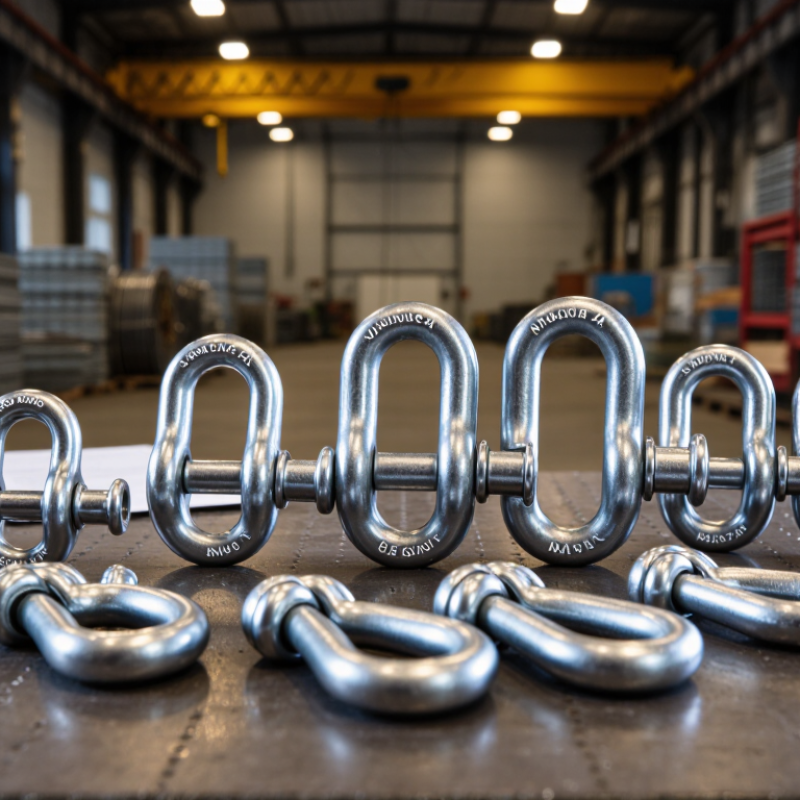
Top 10 China Rigging Shackle Manufacturers for Global Buyers?

What Are Rigging Shackles and Why Do Global Buyers Need Reliable Suppliers?

Rigging shackles are load-bearing connectors used with slings, wire ropes, chains, and lifting equipment. They join components while allowing controlled movement under tension. Common designs include screw-pin and safety-pin shackles, each suited to different lifting conditions. A shackle is small, but its failure can affect an entire lifting operation.

Global buyers need reliable suppliers because working load limits must match real site conditions. Material grade, heat treatment, pin hardness, and surface protection all influence performance. Small details matter.

A dependable manufacturer provides permanent markings, clear inspection records, and traceable batch information. Documents should identify the working load limit, proof-test results, dimensions, and applicable technical standards. Photos alone are not enough.

Experienced purchasing teams also check factory quality controls before placing large orders. They may request sample testing, production videos, dimensional reports, and independent inspection. This process takes time, but rushed sourcing creates hidden risk.

A polished certificate cannot replace consistent manufacturing. That assumption can fail. Buyers should also confirm packaging, corrosion protection, replacement-pin availability, and communication during complaints.

In my view, suppliers should explain limitations honestly, including temperature restrictions, side-loading risks, and inspection intervals. No manufacturer is perfect, and even a strong process needs review when lifting conditions change.

How to Evaluate China’s Rigging Shackle Manufacturers

Evaluating China’s rigging shackle manufacturers requires more than comparing online prices. Start with the product’s intended load, working load limit, and operating environment. Ask whether the shackle uses forged alloy steel, controlled heat treatment, and corrosion-resistant finishing. Material certificates should identify the steel grade and batch number. Test reports should show proof-load results, not vague quality claims.

Request clear drawings, dimensional tolerances, and permanent markings on every shackle. Check the pin diameter, thread quality, bow shape, and surface finish on physical samples. Small defects can matter. A sharp edge near the crown may damage a sling during repeated use. Reliable factories maintain inspection records from forging through final packing. Their quality team should explain rejected parts without hesitation.

Visit the production site when the order is important. Observe die maintenance, heat-treatment controls, hardness testing, and load-test equipment. If travel is impractical, use an independent inspection company before shipment. Confirm packaging details too; loose steel parts can arrive scratched or contaminated after a long sea journey. Communication is another practical test. Does the supplier answer technical questions accurately, or only send a price list?

No audit is perfect. A polished sample may hide weak batch control. I would compare samples from different production dates and review corrective-action records. Delivery history, warranty terms, and traceable documentation often reveal more than a low quotation. A manufacturer worth considering can discuss failure risks openly, even when the answer is inconvenient.

How Global Buyers Can Evaluate China’s Rigging Shackle Manufacturers

Recommended evaluation weighting for supplier screening

This editorial scoring model prioritizes verifiable safety compliance, load-test records, material control, dimensional consistency, export documentation, and commercial reliability. Buyers should confirm applicable requirements under standards such as ASME B30.26 and EN 13889, request test certificates and traceability records, and verify that the marked working load limit matches the supplied product.

Top 10 China Rigging Shackle Manufacturers for Global Buyers

Choosing among the top 10 China rigging shackle manufacturers for global buyers requires more than comparing prices. A dependable supplier should provide clear working load limits, material grades, heat-treatment records, and traceable batch numbers. Inspectors should find permanent markings on every shackle, including size, rating, and manufacturer identification. Common options include screw-pin, bolt-type, and safety-pin shackles for lifting, towing, and marine applications. The right design depends on load direction, frequency of use, and site conditions.

Experienced buyers usually request sample products before placing large orders. Check pin threads, bow symmetry, coating quality, and dimensional accuracy with basic gauges. Ask for load-test reports from recognized laboratories, but verify the report number independently. Production audits can reveal details that certificates miss, such as poor storage or inconsistent forging control. Some suppliers communicate well during sales but respond slowly after delivery. That is a practical risk worth considering.

Tips: Confirm whether the stated capacity applies to straight loading only. Avoid side loading unless the supplier provides approved limits. Request inspection photos showing markings and packaging. Compare actual weights with catalog data; unusual differences may indicate design changes. Do not rely on polished surfaces alone. A strong-looking shackle can still have weak documentation, and even careful buyers sometimes overlook replacement-pin compatibility.

Top 10 China Rigging Shackle Manufacturers for Global Buyers

Technical buyer reference based on commonly published international rigging requirements and product specifications

Rank Supplier Profile Primary Product Focus Common Material Typical WLL Range Common Standards Surface Treatment Buyer Verification Priorities Export Suitability
1 Profile A Commercial screw-pin anchor shackles Forged carbon steel 0.5–55 t ASME B30.26; EN 13889 Hot-dip galvanizing or painted finish Proof-load certificate, pin fit, dimensional inspection High
2 Profile B Wide-body sling and lifting shackles Alloy steel 3.25–300 t ASME B30.26; ASTM A574-related testing practices Powder coating or zinc coating WLL markings, magnetic-particle testing, traceability High
3 Profile C Chain sling and general-purpose bow shackles Grade 8 or Grade 10 alloy steel 1–85 t EN 13889; ASME B30.26 Galvanized, painted, or black oxide Compatibility with chain diameter and sling angle High
4 Profile D Stainless-steel shackles for marine environments Austenitic stainless steel 0.1–8 t Applicable EN and ASTM material requirements Passivated or electropolished Corrosion resistance, material grade, salt-spray results Medium–High
5 Profile E Bolt-type safety shackles Heat-treated alloy steel 2–150 t ASME B30.26; EN 13889 Hot-dip galvanized or electro-galvanized Nut-and-cotter security, thread quality, load testing High
6 Profile F Anchor shackles for towing and marine work Forged carbon or alloy steel 1–120 t Marine and lifting application requirements Hot-dip galvanizing Side loading limits, pin retention, corrosion protection Medium–High
7 Profile G Compact shackles for light-duty industrial use Carbon steel or stainless steel 0.05–5 t Applicable dimensional and material standards Zinc plating or polished finish Working-load labeling and thread engagement Medium
8 Profile H Custom-engineered lifting shackles Specified alloy steel 10–500+ t Project-specific code and third-party requirements Painted, galvanized, or engineered coating Design calculations, FEA, prototype testing, certification Medium–High
9 Profile I OEM and private-label shackle production Carbon or alloy steel 0.5–100 t Buyer-specified ASTM, ASME, or EN requirements Customer-specified finish Process control, packaging, labeling, inspection records Medium–High
10 Profile J Small-batch and rapid-customization shackles Forged steel or stainless steel 0.1–30 t Applicable regional lifting standards Zinc-plated, galvanized, or painted Sample approval, batch consistency, independent inspection Medium
Buyer note: Working load limits vary by shackle design, material, loading direction, safety factor, and applicable standard. Confirm the product marking, material certificate, proof-load record, inspection report, and permitted loading configuration before purchase or use.

How Chinese Shackle Manufacturers Compare in Quality, Price, and Capacity

Top 10 China Rigging Shackle Manufacturers for Global Buyers?

Chinese shackle manufacturers differ sharply in quality, price, and production capacity. During supplier audits, I check forging surfaces, pin threads, markings, and batch records. A reliable factory can provide material certificates, proof-load results, and traceable heat-treatment records. These details matter more than polished catalog images. Some manufacturers use forged alloy steel, while others offer lower-cost carbon steel for lighter applications. The difference appears under repeated loading.

Price usually reflects steel grade, machining accuracy, coating, testing, and packaging. A very low quotation deserves careful questions. Ask whether the price includes inspection, certificates, export packing, and replacement support. Galvanized shackles may look similar, but coating thickness and salt-spray performance can vary. Small defects hide easily. I have seen clean-looking pins with rough threads and inconsistent fit.

Capacity is not only a monthly number. Buyers should review forging equipment, heat-treatment control, inspection staff, and warehouse space. A large plant may handle thousands of pieces, yet struggle with custom dimensions or urgent samples. A smaller workshop may provide better communication but lack stable batch capacity. Request production photos, sample reports, and a realistic lead-time schedule. Check whether the working load limit is clearly marked and matches the supplied documents. Mistakes happen, even in experienced factories. Independent inspection remains worthwhile for high-value or safety-critical orders.

How to Select and Purchase the Right Chinese Rigging Shackle Supplier

Selecting the right Chinese rigging shackle supplier requires more than comparing prices. Check the working load limit, breaking load, material grade, pin design, and surface finish. Ask for test reports, batch numbers, inspection records, and clear product drawings. A dependable supplier should explain tolerances and manufacturing controls without avoiding technical questions.

In practical sourcing, sample inspection matters. Measure the shackle body and pin, inspect the threads, and check for cracks, rough edges, or uneven coating. Request a sample before placing a large order. Factory videos can help, but an independent inspection gives stronger evidence. Confirm production capacity, lead times, export packaging, and communication procedures. A low quotation may hide weaker steel or inconsistent testing. I have seen buyers focus too heavily on unit price. That decision often becomes expensive later. Some suppliers also provide excellent documents but weak after-sales support. This is easy to miss.

Tips: Match the shackle to its real lifting environment, including load direction, temperature, corrosion, and frequency of use. Confirm whether certification meets your destination market and project requirements. Keep written records of specifications, approved samples, inspection points, and shipment terms. Ask how rejected products are handled. Good answers should be specific. Do not rely on promises alone. A spreadsheet helps, but it cannot replace judgment. Recheck the final details before payment.

FAQS

What is a rigging shackle used for?

It connects slings, chains, wire ropes, and lifting equipment. The shackle allows controlled movement under tension.

Why do global buyers need reliable suppliers?

A lifting failure can affect the entire operation. Reliable suppliers match working load limits with real site conditions.

Which documents should buyers request?

Request material certificates, proof-test results, dimensional reports, inspection records, and traceable batch information. Photos alone are not enough.

What materials and processes should buyers check?

Check forged alloy steel, controlled heat treatment, pin hardness, and corrosion-resistant finishing. These details influence service performance.

How can buyers inspect a physical sample?

Check pin diameter, thread quality, bow symmetry, surface finish, and permanent markings. Use basic gauges when possible.

What markings should appear on each shackle?

Markings should show the size, working load limit, and batch or manufacturer identification. They should remain readable after handling.

What common defects deserve attention?

Look for sharp edges, uneven bows, damaged threads, poor coatings, and unusual weight differences. Small defects can matter.

Should buyers visit the production site?

Visit when the order is important. Observe forging control, die maintenance, heat treatment, hardness testing, and load-test equipment.

What if a factory visit is impractical?

Use an independent inspection before shipment. Request production videos, dimensional reports, sample testing, and packaging photos.

What loading limits should users confirm?

Confirm whether the capacity applies only to straight loading. Side loading can create additional risk and needs approved limits.

How can buyers evaluate communication quality?

Ask specific technical questions. A capable supplier explains limitations, inspection intervals, and corrective actions clearly.

What packaging details should buyers review?

Confirm corrosion protection, internal separation, and secure packing. Loose steel parts may arrive scratched after a long sea journey.

How can buyers avoid trusting an attractive sample too much?

Compare samples from different production dates. Review batch records and corrective actions, not only polished surfaces.

What replacement-part issue should buyers consider?

Confirm replacement-pin compatibility before ordering. This detail is easy to overlook and may delay field repairs.

Can certificates guarantee consistent quality?

No. A certificate cannot replace stable manufacturing controls, physical inspection, and traceable production records. That assumption can fail.

Conclusion

This guide introduces China Rigging Shackle products and explains why dependable suppliers are essential for lifting, construction, marine, logistics, and industrial applications. It outlines the basic function of shackles, including their role in connecting and securing lifting components, while emphasizing the importance of material quality, load ratings, safety factors, certifications, testing procedures, and production consistency when evaluating Chinese manufacturers. Buyers will also learn how to compare suppliers based on manufacturing experience, quality-control systems, customization capabilities, export service, delivery reliability, and after-sales support.

The overview presents ten types of leading China Rigging Shackle manufacturers for global buyers without focusing on any specific brand. It compares common differences in quality, pricing, production capacity, order flexibility, and lead times, helping purchasers understand which supplier profiles may suit different project requirements. Finally, the guide provides a practical purchasing approach: define technical specifications, verify documentation and testing records, request samples, assess communication, confirm packaging and shipping arrangements, and negotiate clear commercial terms before placing an order.


Henry

Henry

Henry is a dedicated marketing professional with a profound expertise in the company's offerings. With years of experience in the industry, he possesses an impressive understanding of the market dynamics and consumer behaviors that drive success. Henry is committed to sharing his insights through......