Choosing a China Crosby Rigging supplier requires more than comparing prices on a product page. Buyers should examine material certificates, working load limits, inspection records, and production controls. These details matter when a shackle supports a heavy steel beam above a busy worksite. A polished catalogue is not proof of dependable performance.
Rigging engineer and safety auditor David R. Harkins explains, “A trustworthy supplier proves every link, not just the final price.” His observation reflects a practical purchasing standard. Reliable suppliers should identify genuine Crosby products, provide traceable documentation, and explain safe application limits clearly. They should also understand sling angles, lifting points, environmental exposure, and inspection intervals. Small details prevent expensive mistakes.
Ask for evidence.
An experienced China Crosby Rigging supplier can support custom packaging, export coordination, and responsive technical communication. However, buyers should not assume every factory offers the same quality. Some listings use familiar brand terms without proving authorization or traceability. That deserves careful attention. Verify model numbers, markings, certificates, and supplier history before placing an order.
Site experience also matters. A supplier who understands crowded warehouses, abrasive edges, rain, and repeated lifting cycles can recommend more suitable equipment. Still, no supplier can replace competent inspection and trained operators. That is an important limitation. The best sourcing decision combines verified products, honest communication, and disciplined workplace practices. This approach makes China Crosby Rigging purchasing more transparent, safer, and easier to defend during internal audits.
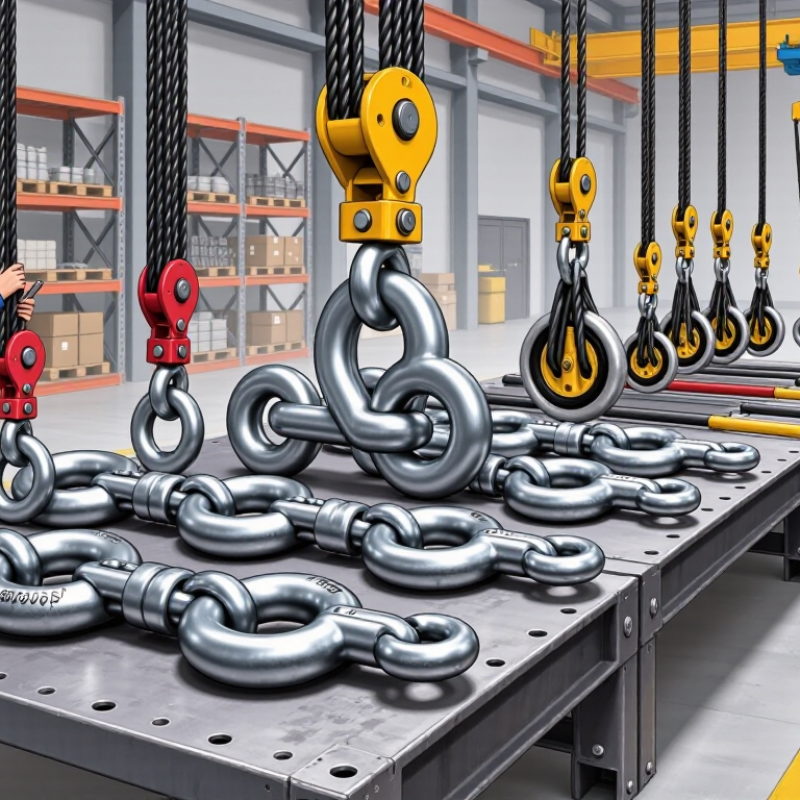
China-based rigging suppliers are manufacturers and exporters that produce lifting hardware for industrial applications. Their product ranges may include shackles, wire rope clips, hooks, swivels, turnbuckles, and lifting points. These components support cranes, construction equipment, marine operations, and material-handling systems.
A reliable supplier should explain how each product is made, tested, and marked. In practice, this means checking material certificates, heat-treatment records, working load limits, and batch traceability. Ask for dimensional drawings and inspection reports before placing a large order. A professional supplier will also describe proof-load testing, surface treatment, and packaging methods. Small details matter. A poorly protected shackle can arrive with damaged threads or corrosion marks.
Site experience reveals more than a polished catalog. I have found that clear communication often separates dependable factories from trading companies. Suppliers should answer technical questions without vague promises. They should also identify limits, such as unsuitable temperatures, side loading, or incorrect sling angles. Some factories offer competitive prices but provide incomplete documents. That is not automatically a failure, but it requires careful follow-up. Buyers should compare samples, verify independent test options, and confirm whether production matches the approved sample. Mistakes happen. Reliable suppliers respond openly and correct them through documented procedures.
China-based rigging suppliers commonly provide forged shackles, wire rope clips, lifting hooks, swivels, turnbuckles, and eye bolts. They also supply master links, connecting links, plate clamps, and wire rope sockets for varied lifting arrangements. These components must match the rope diameter, load direction, and working load limit. A compact shackle may look suitable, yet its pin size can restrict the connection. Small details matter.
Reliable suppliers usually offer carbon steel or alloy steel options, with finishes for indoor and outdoor use. They should provide material certificates, heat numbers, dimensional drawings, and test records for each production batch. Factories with forging presses, heat-treatment systems, and tensile testing equipment can control consistency more effectively. Buyers should confirm traceability and recognized lifting requirements before placing a large order. A low quotation is not quality evidence.
Custom supply is another common service, including special threads, colored markings, nonstandard openings, and private packaging. However, customization can introduce mistakes when drawings lack tolerances or inspection points. I would request a sample, photograph the markings, and verify dimensions with calipers before approval. Suppliers should also explain inspection frequency, corrosion protection, and replacement procedures. This process feels slower. It prevents avoidable surprises.
Representative working load limit ranges for commonly supplied industrial rigging products. Actual ratings vary by size, material, design, and applicable standards.
China-based rigging suppliers commonly provide a broad range of lifting hardware, including shackles, hooks, wire rope clips, turnbuckles, swivels, and lifting clamps. These products are widely used in construction, marine, logistics, energy, and general material-handling applications. Product selection should always be verified against the required working load limit, safety factor, traceability, and relevant standards such as ASME B30.26, EN 13889, or ISO requirements.
Chinese rigging suppliers support quality by building checks into each production stage. Experienced teams review drawings, working load limits, and application conditions before fabrication. Steel certificates, heat numbers, and batch records can follow each component. This creates a practical audit trail. Small details matter. Suppliers may also use calibrated testing machines for proof-load checks. Inspectors record deformation, dimensions, surface condition, and markings before packing.
Compliance support goes beyond a certificate in a file. Suppliers can prepare inspection plans, test reports, risk documents, and export paperwork for review. Engineers familiar with regional requirements compare product specifications with project standards. Independent laboratories may verify material strength or load performance. Clear photographs help remote buyers inspect welds, pins, threads, and protective coatings. This process improves trust, though it requires consistent communication.
Reliable cooperation includes corrective action. When a dimension is missed, responsible teams should isolate the batch, identify the cause, and document the fix. Not every supplier manages this perfectly. Some reports need clearer English, and follow-up audits can be uneven. Buyers should verify certificates, request samples, and confirm testing methods before placing large orders. That practical caution protects quality and supports safer lifting operations.
When comparing China-based rigging suppliers, buyers should examine evidence, not attractive catalog images. Ask for material certificates, working load limit charts, heat numbers, and proof-load records. Each batch should be traceable from steel receipt to final inspection. ISO 9001 certification helps, but it does not prove product quality alone. Confirm whether laboratories hold ISO/IEC 17025 accreditation for tensile and hardness testing. Request sample reports before placing a large order.
Safety records deserve close attention. The International Labour Organization reported nearly 3 million work-related deaths globally in 2023. Rigging failures are only one part of this wider problem, yet weak documentation can increase exposure. Compare inspection frequency, rejected-batch rates, corrective-action records, and worker training. A supplier should explain how shackles, wire rope assemblies, and lifting points are tested against applicable standards. Independent inspection can add cost, but it may reveal inconsistent markings or incorrect dimensions.
Do not ignore practical performance. Compare lead times, packaging strength, corrosion protection, replacement support, and communication during a factory audit. Ask to see production lines, calibration labels, and finished goods stored away from moisture. The cheapest quotation may hide thinner materials or incomplete certificates. That is uncomfortable. Buyers also make mistakes by trusting one successful sample. A stronger decision uses several production batches, clear acceptance criteria, and documented reinspection. Reports from the World Steel Association show continuing volatility in steel markets, so buyers should also review how price changes affect material grade and delivery reliability.
Choosing a China-based rigging supplier requires more than comparing prices. Buyers should verify reliability through evidence that can be checked independently. The ISO Survey 2023 recorded more than 1.2 million ISO 9001 certificates worldwide, but certification alone cannot prove product quality. Ask for the certificate number, issuing body, scope, and expiration date. Then confirm those details directly with the certification database or organization.
Authenticity needs physical and documentary checks. The OECD and EUIPO reported that counterfeit goods represented up to 3.3% of global trade, based on 2019 customs data. For lifting components, request permanent markings, batch numbers, material certificates, rated-load information, and inspection records. Match every document with the sample in your hands. A missing heat number is not a small detail. It weakens traceability.
Experienced buyers can also arrange pre-shipment inspections and independent load testing. Check dimensions with calipers, inspect welds and threads, and photograph packaging before dispatch. Review whether the supplier keeps test records for each production batch. Factory videos are useful, but they are not proof. An on-site audit or third-party inspection is stronger. I have found that honest suppliers usually answer technical questions clearly, even when a request is difficult. Some suppliers still provide polished documents with inconsistent dates or signatures. That deserves a pause, not an argument. Reliability is built through repeatable evidence, not confident promises.
| Verification Dimension | What Buyers Should Verify | Reliable Evidence to Request | Recommended Buyer Action | Risk Level if Missing |
|---|---|---|---|---|
| Legal business identity | Confirm that the supplier is a legally registered business and that its registered business scope is consistent with manufacturing, trading, or supplying lifting and rigging products. | Business registration information, registered address, legal representative details, tax information, and a company bank account matching the legal entity. | Cross-check the information through an official government business-registration database or a qualified third-party verification service. | High |
| Product authenticity | Determine whether the product is genuine, correctly identified, and supplied through an authorized or traceable channel. Do not rely only on product photos or packaging. | Original product labels, serial or batch numbers, traceability records, purchase-channel documentation, certificates, and manufacturer authorization where applicable. | Verify identification details independently with the relevant manufacturer or authorized channel before placing a large order. | High |
| Working load limit | Check that the stated working load limit is clearly marked and suitable for the intended lifting configuration, angle, connection method, and environmental conditions. | Product data sheet, permanent marking, inspection certificate, working load limit chart, and configuration-specific technical instructions. | Compare the marked rating with the applicable technical documentation and have a competent lifting professional review the selection. | High |
| Material and grade | Verify the material type, strength grade, heat-treatment requirements, and component compatibility for the intended application. | Material certificates, heat-number traceability, chemical and mechanical test results, and inspection records linked to the supplied batch. | Require batch-level documentation and confirm that the material information matches the product marking and purchase specification. | High |
| Applicable standards | Identify which national, international, or industry standards apply to the specific product. A standard should not be claimed unless the product scope and requirements match. | Declaration of conformity, test reports, inspection plans, standard references, and certification scope showing the product covered. | Check the certificate issuer, validity, scope, model range, and test method instead of accepting a logo or certificate number alone. | High |
| Independent testing | Assess whether testing was performed by a competent and independent laboratory or inspection body using suitable methods and calibrated equipment. | Complete test reports, laboratory accreditation details, equipment calibration records, sample identification, and test dates. | Contact the issuing organization through independently obtained contact details to confirm report authenticity and scope. | Medium |
| Factory capability | Establish whether the supplier controls production or is acting only as an intermediary. Review processes relevant to forging, machining, heat treatment, coating, assembly, and inspection. | Factory audit report, production-flow description, equipment list, quality-control procedures, inspection records, and current facility photographs or video. | Arrange a remote or on-site audit and compare the audited facility with the address shown on commercial documents. | Medium |
| Quality management | Review how the supplier controls nonconforming products, corrective actions, document revisions, supplier quality, and final inspection. | Quality manual, inspection and test plan, nonconformance records, corrective-action samples, internal-audit records, and management-system certificate where relevant. | Ask for a sample inspection plan and define acceptance criteria in the purchase contract before production begins. | Medium |
| Pre-shipment inspection | Confirm that the ordered quantity, dimensions, markings, finish, packaging, and documentation are inspected before shipment. | Inspection checklist, photographs with identifying marks, measurement records, quantity report, and signed release document. | Use an independent inspection service for high-value or safety-critical orders and retain the final inspection record. | Medium |
| Product marking and traceability | Check that each item or package carries durable and legible information required for identification and safe use, such as size, grade, rated capacity, batch, or manufacturer reference. | Marking layout, sample photographs, batch records, packing list, certificate-to-product cross-reference, and traceability procedure. | Match the physical markings against the order, certificate, packing list, and inspection report before acceptance. | High |
| Documentation consistency | Make sure the quotation, purchase order, drawings, product labels, certificates, packing list, and invoice describe the same product and legal supplier. | Document set containing consistent model references, specifications, quantities, batch numbers, dates, and legal-entity information. | Use a document-control checklist and reject unexplained changes in product references, issuing entities, or specifications. | High |
| Sample and production match | Verify that the mass-produced goods match the approved sample in dimensions, materials, markings, workmanship, packaging, and documentation. | Approved sample record, signed specification, production sample photos, dimensional report, and pre-shipment inspection results. | Approve a golden sample or technical drawing and include a written change-control requirement in the contract. | Medium |
| Commercial transparency | Review whether pricing, lead time, payment terms, warranty conditions, and shipping documents are clear and commercially consistent. | Formal quotation, pro forma invoice, contract, warranty terms, payment instructions, export documents, and written communication history. | Pay only to the verified legal entity and investigate urgent bank-account changes or unusually low prices. | High |
| After-sales support | Evaluate the supplier’s ability to provide installation guidance, inspection advice, replacement parts, complaint handling, and corrective action. | Warranty procedure, response-time commitment, technical support contacts, complaint records, replacement policy, and inspection guidance. | Define service responsibilities, response times, documentation requirements, and remedies in the purchase agreement. | Medium |
| Safety and user instructions | Confirm that the product is supplied with instructions covering inspection, use, storage, limitations, and conditions that can reduce capacity or cause failure. | Operating instructions, inspection criteria, discard criteria, capacity tables, warnings, and applicable technical drawings. | Ensure the end user receives the correct instructions in an understandable language before the product enters service. | High |
| Order risk control | Assess whether the buyer has controls for first orders, high-risk applications, custom products, and safety-critical lifting operations. | Supplier evaluation record, risk assessment, approved-vendor procedure, inspection plan, contract terms, and escalation process. | Start with samples or a controlled trial order, then increase volume only after documents and performance are verified. | Medium |
They can add inspections at each production stage. Engineers review drawings, load limits, and working conditions before fabrication. Small details matter.
Useful records include steel certificates, heat numbers, batch details, and inspection results. These records connect each component with its production history. Missing numbers deserve attention.
Suppliers may use calibrated machines for proof-load testing. Inspectors check deformation, dimensions, surface condition, welds, threads, and markings. Results should be recorded clearly.
Buyers can request inspection plans, test reports, risk documents, and export paperwork. Engineers may compare product specifications with project requirements. The paperwork still needs review.
Check the certificate number, issuing organization, scope, and expiry date. Confirm the information through an independent certification database. A certificate alone proves little.
Match permanent markings and batch numbers with the supplied documents. Check material certificates, rated-load information, and inspection records. Hold the sample in your hands.
Independent inspections can check dimensions, welds, threads, packaging, and load performance. An on-site visit is stronger than a factory video. Videos are not proof.
Be careful with inconsistent dates, signatures, markings, or test methods. Some reports use unclear English. That creates avoidable doubt.
The supplier should isolate the affected batch and identify the cause. The corrective action should be documented and checked later. Not every supplier handles this perfectly. Buyers should remain cautious.
China Crosby Rigging suppliers are manufacturers and exporters that provide lifting and load-securement equipment designed for construction, shipping, energy, mining, and industrial applications. Their commonly supplied products may include shackles, wire rope clips, turnbuckles, hooks, master links, lifting points, and related rigging accessories. A dependable supplier should be able to explain material selection, manufacturing procedures, load ratings, testing methods, surface treatment, and applicable safety standards. Clear documentation, traceability, inspection reports, and consistent product labeling are important indicators of quality and compliance.
Before choosing a supplier, buyers should compare product specifications, production capacity, lead times, customization options, pricing, packaging, communication, and after-sales support. Reliability can be verified by reviewing business qualifications, factory capabilities, quality-control procedures, sample orders, and independent inspection results. Buyers should also confirm that product markings, certificates, dimensions, and rated capacities match the purchase requirements. Careful comparison and verification can help reduce purchasing risks and establish a stable, transparent supply relationship.

Rui De Tai